Creative practice
You Don’t Need an Entire Afternoon to Be Creative
What if ten minutes were enough to begin?
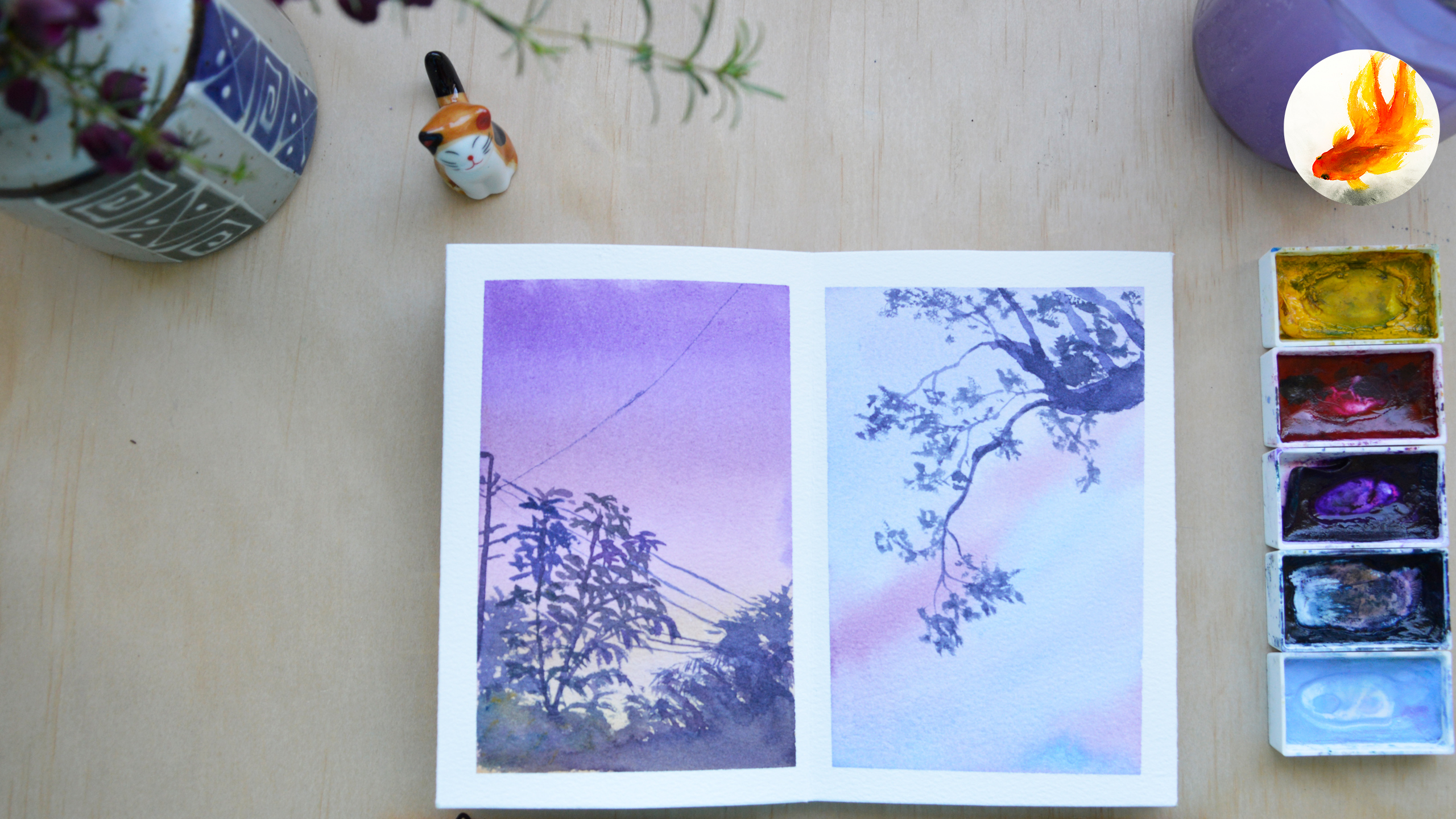
Have you ever told yourself that you'll paint when life gets a little quieter?
When work settles down. When the house is tidy. When your to-do list is shorter. When you finally have a whole afternoon to yourself.
It sounds reasonable. Painting takes time, after all.
But the quiet afternoon doesn't always arrive.
There is always another task, another responsibility, or another reason to leave your paints where they are.
And something you genuinely want to do can slowly become something you keep postponing.
If this sounds familiar, perhaps we can approach creativity a little differently.
What if you didn't need a long stretch of free time to begin?
Start smaller than you think
Imagine setting aside just ten minutes.
You take out a small sheet of watercolour paper, choose two or three colours, and paint a simple flower.
You don't need to plan a complicated composition. You don't need to finish a polished artwork. You don't even need to decide what the painting will become before you start.
You simply begin.
Perhaps you paint a few petals. Perhaps you practise blending two colours. Perhaps you make a page of little leaves, each one slightly different from the last.
When your ten minutes are over, you can stop.
If you want to continue, you can. If you need to return to the rest of your day, that's fine, too.
The important thing is that creativity has found a small place in your day, rather than waiting for the perfect conditions.
A small painting can still be meaningful
We often measure progress by what we finish.
A complete painting feels like an achievement. A page of practice marks may seem less important.
But small creative moments can be valuable in their own way.
Each time you practise, you have an opportunity to notice something. You might discover a colour combination you like, learn how much water your brush holds, or realise that a simple shape is more interesting than you expected.
You may not see a dramatic improvement after one short session. That's okay.
Learning often grows through repeated experiences — trying, noticing, adjusting and trying again.
And sometimes, the benefit of painting isn't about improving a skill at all.
It can be about giving yourself permission to do something without needing it to be productive, impressive or useful to anyone else.
For those few minutes, the painting can simply be yours.
A gentle ten-minute painting ritual
If you'd like to try this, here is a simple way to begin.
Minute 1–2: Arrive
Put your phone aside if you can. Gather your paper, brush, water and a few colours. Take a moment to notice the light, the colours around you, or something in nature that catches your attention.
Minute 3–4: Choose something simple
Pick a flower, a leaf, a small cloud or a colour combination you like. You don't need a complicated reference. One simple shape is enough.
Minute 5–8: Paint and observe
Let yourself experiment. Notice how the paint moves, how colours mix, and what happens when you use a little more or less water.
If something unexpected happens, pause and look at it before deciding what to do next.
Minute 9–10: Finish gently
You might add one final detail, or simply leave the painting as it is. Take a moment to notice something you enjoyed or learned.
Then put your brushes away without judging the session by whether you created something beautiful.
You showed up. That counts.
You are allowed to begin before you feel ready
Perhaps you are new to watercolour and worry that you don't have enough skill.
Perhaps you used to paint but haven't picked up a brush in years.
Or perhaps you have plenty of ideas but feel overwhelmed by all the techniques you think you need to learn first.
You don't have to solve all of that today.
You can learn one flower. One colour mixture. One new way of using your brush.
Over time, those small experiments can help you develop both your skills and your own way of painting.
You don't need to compare your beginning with someone else's finished work.
You only need to find a starting point that feels manageable for you.
Let's paint one little flower together
I created the free 5-Day Watercolor Bloom for people who want to begin painting in a gentle, approachable way.
Over five days, we'll explore one simple flower each day, with beginner-friendly lessons to help you practise without the pressure of making everything perfect.
You can use the experience to build a small creative ritual of your own — a few minutes to experiment, learn and enjoy the process.
Join the free 5-Day Watercolor Bloom →
And here's a little question to take with you:
If you had ten minutes just for yourself today, what would you like to paint?
A flower from your garden? A view from your window? A butterfly? Or simply a few colours that make you happy?
You don't have to wait for a quieter life to make a little room for creativity.
You can begin with one small moment.
— Lucy | ZenBeautifulArt
← Back to the blog